High-purity APIs, customized building blocks, and standard research compounds manufactured to cGMP criteria.
Body Protection Compound 157 (BPC-157) represents a milestone in synthetic peptide engineering. As demand for high-concentration lyophilized formats surges globally, contract manufacturers and procurement leaders require institutional-grade clarity regarding synthesis protocols, stability parameters, and factory-direct export economics.
The transition of BPC-157 from laboratory curiosity to a high-volume active pharmaceutical ingredient (API) building block has reshaped global procurement workflows. As a pentadecapeptide composed of 15 amino acids (Gly-Glu-Pro-Pro-Pro-Gly-Lys-Pro-Ala-Asp-Asp-Ala-Gly-Leu-Val), BPC-157 demands rigid stereochemical precision during synthesis to prevent racemization.
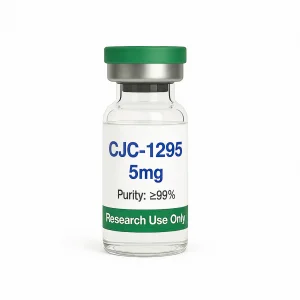
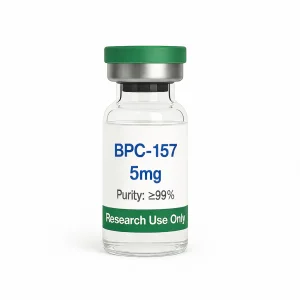
Global buyers—ranging from specialized biopharmaceutical research enterprises to institutional compounding facilities—are increasingly bypassing intermediary brokers to connect directly with primary Chinese synthesis plants. The 10mg lyophilized vial dosage has emerged as the definitive benchmark for commercial research, offering optimal reconstitutive stability and volumetric flexibility compared to smaller 5mg formats.
A primary bottleneck in high-yield peptide export is peptide aggregation and trifluoroacetic acid (TFA) salt retention during bulk freeze-drying. Traditional exporters often struggle with vial-to-vial content uniformity at the 10mg threshold.
Gentolex resolves this issue through advanced counter-ion exchange technologies (replacing residual TFA with acetate or succinate matrices) and controlled step-down lyophilization cycles. This technical innovation guarantees 99%+ batch dissolution kinetics, enhanced thermal resilience during cross-border transit, and extended shelf-life under standard storage parameters.
Our state-of-the-art solid-phase peptide synthesis (SPPS) protocols ensure rigorous purity, precise molecular mass identification, and exact stoichiometric balancing.
| Analytical Parameter | Industry Standard Specification | Gentolex Wholesale Standard | Testing Methodology |
|---|---|---|---|
| Chemical Name | Body Protection Compound 157 | BPC-157 Acetate / Succinate Salt | IUPAC Nomenclature |
| CAS Registry Number | 137525-51-0 | 137525-51-0 Verified | CAS Database Audit |
| Molecular Formula / Mass | C62H98N16O22 / 1419.56 Da | 1419.56 ± 0.5 Da Exact Mass | ESI-MS (Electrospray Ionization) |
| Purity Level (Area %) | ≥ 98.0% | ≥ 99.2% - 99.7% | RP-HPLC (C18 Column, 214nm) |
| Residual Solvents | < 0.5% (ICH Limits) | < 0.1% (Strict Vacuum Drying) | Headspace Gas Chromatography (GC-MS) |
| Bacterial Endotoxins | < 10 EU/mg | < 0.05 EU/mg (Pyrogen Free) | LAL Kinetic Chromogenic Method |
| Physical State | White Lyophilized Powder | Uniform Cake Lyophilized Vial (10mg) | Visual & Moisture Analysis (Karl Fischer) |
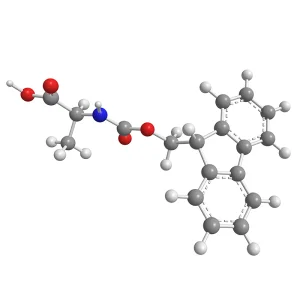
Utilizing high-capacity resin matrices (Wang Resin or Rink Amide), automated microwave-assisted synthesizers couple Fmoc-protected amino acids with coupling reagents such as HATU/DIC. This minimizes truncation sequences and guarantees high coupling efficiency even through hydrophobic stretches.
Crude peptide cleaved from resin undergoes multi-stage Preparative Reversed-Phase HPLC using industrial C18 columns. Gradient elution with acetonitrile/water binary systems isolates the primary BPC-157 peak away from diastereomeric impurities.
Purified solution is adjusted for counter-ion profile, passed through a 0.22 μm sterile membrane inside Class 100 cleanrooms, and subjected to a 48-hour freeze-drying cycle within automated 10mg glass vial filling lines.
Understanding how BPC-157 10mg is utilized across global academic, clinical, and industrial research environments.
Originally isolated from human gastric juice, BPC-157 demonstrates profound cytoprotective properties. In biomedical research models across Europe and North America, BPC-157 is widely studied for its ability to mitigate inflammatory bowel disease (IBD) indicators, heal gastric ulcers, and restore mucosal barrier function against chemical insults.
Key Biomarker Focus: Upregulation of Early Growth Response 1 (EGR-1) and focal adhesion kinase (FAK) signaling in epithelial tissue repair models.
Research institutions leverage BPC-157 10mg formulations to evaluate tendon-to-bone healing protocols. The peptide accelerates fibroblast migration, collagen type I synthesis, and localized blood vessel formation (angiogenesis) via interaction with VEGFR2 signaling pathways without stimulating uncontrolled oncogenic tissue growth.
Key Biomarker Focus: Enhanced vascular endothelial growth factor (VEGF) expression and organized collagen cross-linking in ligament repair.
Emerging research in Japan and South Korea investigates BPC-157’s neuroprotective potential along the gut-brain axis. Studies focus on its interaction with dopaminergic and serotonergic pathways, demonstrating therapeutic promises in counteracting central nervous system damage, neuroinflammation, and drug-induced lesions.
Key Biomarker Focus: Attenuation of neuroinflammatory cytokines (TNF-α, IL-6) and protection of nigrostriatal neurons.
In international veterinary research, bulk BPC-157 10mg vials are reconstituted for equine and canine regenerative medicine trials. Application scenarios include accelerating recovery from severe soft-tissue injuries, joint degeneration, and post-surgical wound repair in high-performance equine subjects.
Key Biomarker Focus: Accelerated re-epithelialization and reduction of scar tissue formation in large animal models.
How Gentolex leverages massive manufacturing scale, raw material backward integration, and cGMP compliance to deliver unparalleled export efficiency.
Gentolex operates an integrated chemical and peptide production complex designed according to international cGMP, ISO 9001, and ISO 14001 standards. Multiple continuous-flow synthesis suites allow seamless scaling from gram-level trial batches to metric-ton commercial bulk runs.
By producing our own protected amino acids (Fmoc/tBu series) and specialized coupling solvents (such as high-purity DMAC and DMF), Gentolex mitigates global supply chain volatility, ensuring stable lead times and immune-to-inflation factory pricing for wholesale partners.
Peptide stability during cross-border transit is guaranteed through temperature-validated packaging, real-time IoT temperature monitoring, and established express courier routes (DHL, FedEx, specialized chemical logistics) ensuring delivery within 3-5 business days globally.
Gentolex’s goal is to create opportunities connecting the world with better services and guaranteed products. Up to date, Gentolex Group has been serving customers from more than 10 countries, specially, representatives are established in Mexico and South Africa. Our main services focus on supplying peptides APIs and Custom Peptides, FDF license out, Technical Support & Consultation, Product Line and Lab Setup, Sourcing & Supply Chain Solutions.
An overall factory construction area of 250,000 square meters under international standard to offer flexible, scalable and cost-effective solutions.
Gentolex offers an extensive range of APIs and intermediates for development study and commercial application with cGMP standard from long-term collaborations. Documents and Certificates are supported to customers worldwide.
The future of BPC-157 10mg manufacturing lies in green chemistry, continuous flow liquid-phase peptide synthesis (LPPS), and novel delivery formulations.
Traditional SPPS relies heavily on hazardous solvents like DMF and NMP. Gentolex is pioneering green solvent alternatives—such as water-soluble coupling media and renewable bio-based solvents—reducing toxic waste output by up to 60% without compromising batch yield or purity parameters.
For mega-scale global demand, Gentolex is transitioning fragment condensation steps of BPC-157 into continuous-flow reactors. This hybrid SPPS-LPPS strategy cuts synthesis time by half and enables annual production capacities exceeding 500 kilograms of pure API powder.
To overcome gastric enzymatic breakdown in oral formulations, our R&D team is developing lipid nanoparticle (LNP) and sn-2 palmitate encapsulation protocols for BPC-157 raw materials, widening the scope for pharmaceutical finished dosage form (FDF) integration.
Implementing 600 MHz 2D-NMR structural verification, LC-MS/MS sequence mapping, and automated quantitative endotoxin testing for every batch ensures 100% compliance with stringent FDA, EMA, and NMPA regulatory filings.
Navigating complex international trade laws, customs clearances, and regulatory documentation with complete peace of mind.
Every shipment of BPC-157 10mg is delivered with complete analytical dossiers: High-Performance Liquid Chromatography (HPLC) chromatograms, Mass Spectrometry (MS) graphs, and Microbiological endotoxin reports verified by third-party ISO 17025 accredited labs.
Gentolex handles export customs declarations under accurate HS Code classifications (2937.19). Our local representatives in Mexico and South Africa provide regional customs support, minimizing clearance delays in Latin America and the African continent.
We provide full OEM turnkey services: custom flip-off cap color coding, vial crimping, vacuum box packaging, private labeling, and custom vial concentration configurations (from 2mg to 20mg per vial) to match your brand requirements.
Stay updated with the latest technological developments, manufacturing breakthroughs, and product launches from Gentolex.

Introduction to Selank Acetate API Selank Acetate API is a synthetic heptapeptide active pharmaceutical ingredient (API) composed of the amino acid sequence Thr-Lys-Pro-Arg-Pro-Gly-Pro (TKPRPGP)...
View Details
Trusted Thymosin Beta-4 API Manufacturer and Global Peptide Supplier As a professional Thymosin Beta-4 API manufacturer and supplier, we provide high-quality Thymosin Beta-4 peptide API solutions...
View Details
Introduction BPC-157 API is a synthetic pentadecapeptide that has gained increasing attention in peptide research due to its potential biological activities related to tissue repair...
View Details
With the continuous development of neuroscience, peptide technology, and life science research, neuroactive peptides have become an important area of scientific investigation...
View Details
SS-31 API, also known as Elamipretide, MTP-131, Bendavia, and SS31, is a synthetic mitochondria-targeting tetrapeptide designed to bind cardiolipin in the inner mitochondrial membrane...
View DetailsAnswers to common technical, analytical, and supply-chain inquiries submitted by global buyers and laboratory directors.
Explore our full line of synthetic peptides, anabolic active compounds, and specialty pharmaceutical inputs.