1 / 1

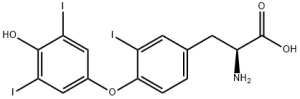
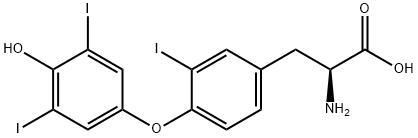
| Name | REVERSE T3 |
| CAS number | 5817-39-0 |
| Molecular formula | C15H12I3NO4 |
| Molecular weight | 650.97 |
| Melting point | 234-238°C |
| Boiling point | 534.6±50.0°C |
| Purity | 98% |
| Storage | Keep in dark place, Sealed in dry, Store in freezer, under -20°C |
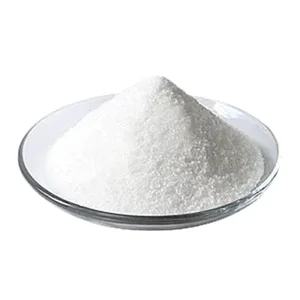
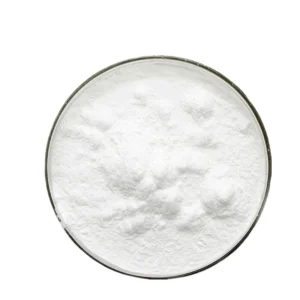
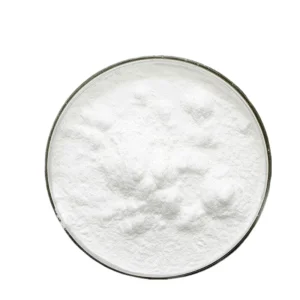
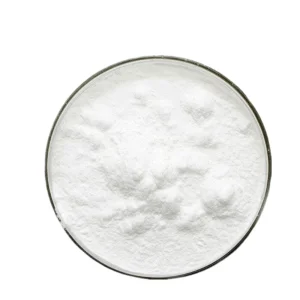
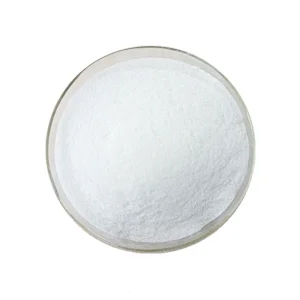
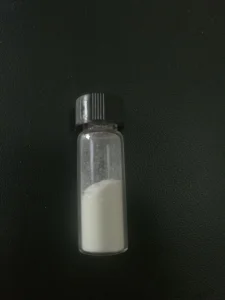
| Form | Powder |
| Color | Pale Beige to Brown |
| Packing | PE bag+Aluminum bag |
The thyroid gland is the largest endocrine gland in the human body, and the main active substances secreted are tetraiodothyronine (T4) and triiodothyronine (T3), which are extremely important for protein synthesis, body temperature regulation, energy production and regulation role. Most of the T3 in the serum is converted from peripheral tissue deiodination, and a small part of T3 is directly secreted by the thyroid and released into the blood. Most of T3 in serum is bound to binding proteins, about 90% of which is bound to thyroxine-binding globulin (TBG), the rest is bound to albumin, and a very small amount is bound to thyroxine-binding prealbumin (TBPA).
The content of T3 in serum is 1/80-1/50 of that of T4, but the biological activity of T3 is 5-10 times that of T4. T3 plays an important role in judging the physiological status of the human body, so it is of great significance to detect the T3 content in serum.
The determination of triiodothyronine is one of the sensitive indicators for the diagnosis of hyperthyroidism. When hyperthyroidism increases, it is also a precursor to the recurrence of hyperthyroidism. In addition, it will also increase during pregnancy and acute hepatitis. Hypothyroidism, simple goiter, acute and chronic nephritis, chronic hepatitis, liver cirrhosis decreased.
Serum T3 concentration reflects the function of the thyroid gland on the surrounding tissues rather than the secretory state of the thyroid gland. T3 determination can be used for the diagnosis of T3-hyperthyroidism, the identification of early hyperthyroidism and the diagnosis of pseudothyrotoxicosis. The total serum T3 level is generally consistent with the change of T4 level. It is a sensitive indicator for the diagnosis of thyroid function, especially for early diagnosis. It is a specific diagnostic indicator for T3 hyperthyroidism, but it has little value for the diagnosis of thyroid function. For patients treated with thyroid drugs, it should be combined with total thyroxine (TT4) and, if necessary, thyrotropin (TSH) at the same time to help judge the thyroid function status.
T3 (triiodothyronine) is a vital active substance secreted by the thyroid gland and converted in peripheral tissues. It plays an extremely important role in regulating protein synthesis, body temperature, energy production, and overall metabolic functions.
Although the serum concentration of T3 is only 1/80 to 1/50 of T4, its biological activity is 5 to 10 times higher than that of T4.
Serum T3 levels typically increase in conditions such as hyperthyroidism, T3-hyperthyroidism, pregnancy, and acute hepatitis. An increase can also indicate a recurrence of hyperthyroidism.
Decreased T3 levels are generally observed in patients with hypothyroidism, simple goiter, acute and chronic nephritis, chronic hepatitis, and liver cirrhosis.
Reverse T3 should be kept sealed in a dry, dark place and stored in a freezer at temperatures below -20°C.
For patients undergoing treatment with thyroid medications, evaluating T3 alongside Total Thyroxine (TT4) and Thyrotropin (TSH) provides a complete assessment of thyroid functional status.