1 / 1

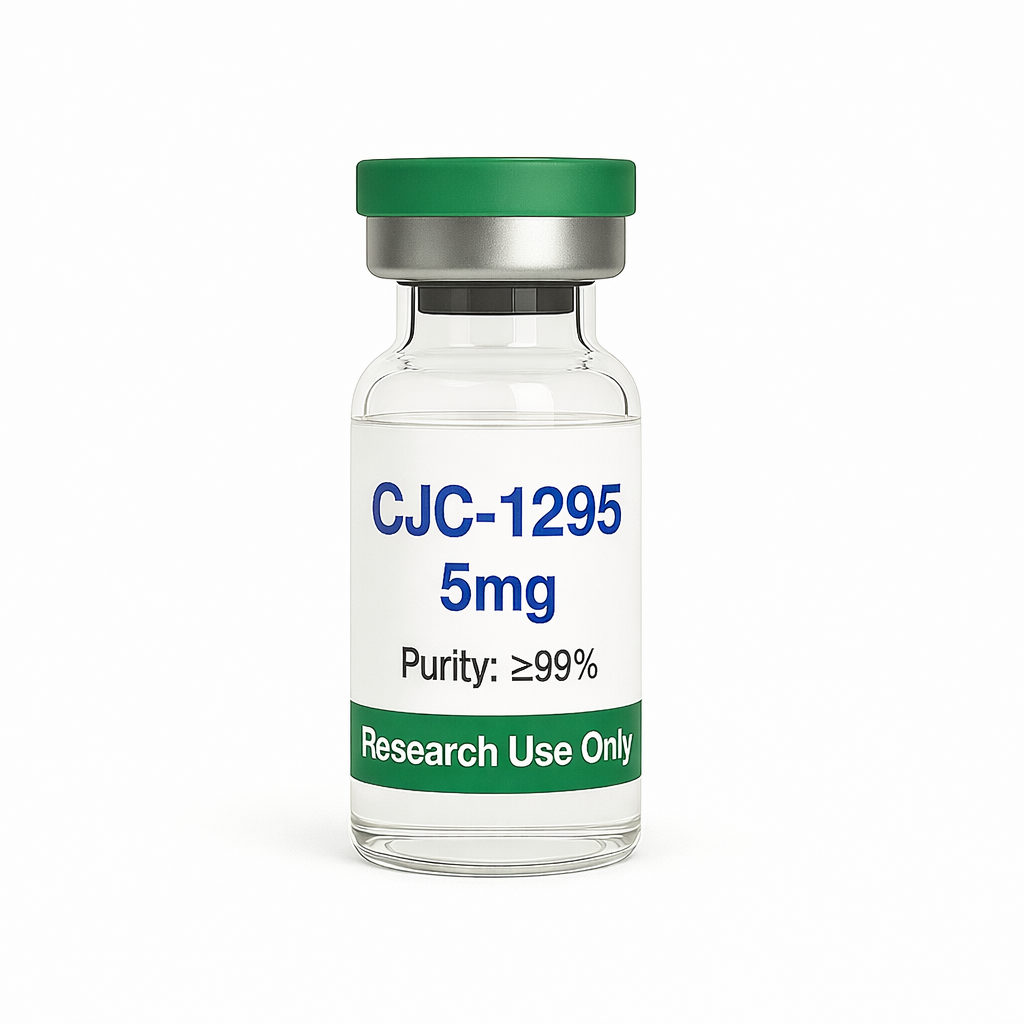
CJC-1295 DAC peptide is a synthetic 29-amino-acid analog of growth hormone-releasing hormone (GHRH). Researchers believe it may increase endogenous growth hormone (GH) secretion by mimicking GHRH function. It is currently the shortest known GHRH analog that can still stimulate GH release from pituitary somatotrophs.
Four amino acids in the original 29-amino-acid GHRH sequence are replaced to improve pharmacokinetic properties and extend half-life.
The DAC moiety, a lysine derivative (N-ε-3-maleimidopropionylamide) attached to the C-terminal, binds plasma proteins, further prolonging the peptide’s half-life.
With DAC integration, CJC-1295 DAC has a half-life of approximately 8 days while retaining high affinity for the GHRH receptor.
Non-DAC CJC-1295 still has research value. For example, it may synergize with Ipamorelin, combining a GHRH analog with a peptide that activates the somatostatin receptor in the pituitary, enhancing GH synthesis.
Common names for CJC-1295 DAC include:
Studies suggest CJC-1295 DAC may influence:
CJC-1295 DAC is a synthetic 29-amino-acid analog of growth hormone-releasing hormone (GHRH) designed to stimulate growth hormone secretion from pituitary somatotrophs.
The Drug Affinity Complex (DAC) component binds to plasma proteins in the body, significantly extending the peptide's active half-life to approximately 8 days.
By stimulating pituitary GH release, it indirectly increases IGF-1 production in the liver and other tissues through the activation of the JAK-STAT signaling pathway.
Research focuses on its potential role in fat reduction, muscle gain, bone density improvement, and sleep quality enhancement.
Clinical studies demonstrate a 2–10 fold increase in average GH levels over 6+ days and a 1.5–3 fold increase in average IGF-1 levels lasting up to 28 days with repeated doses.
The non-DAC version has a much shorter half-life and is often studied in combination with other peptides like Ipamorelin, while the DAC version maintains prolonged activity on its own.