1 / 1

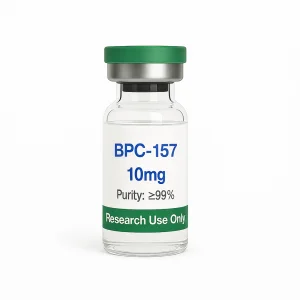
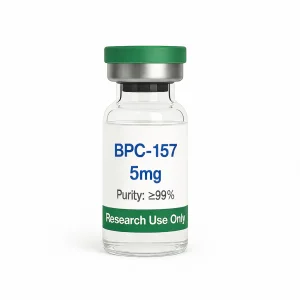
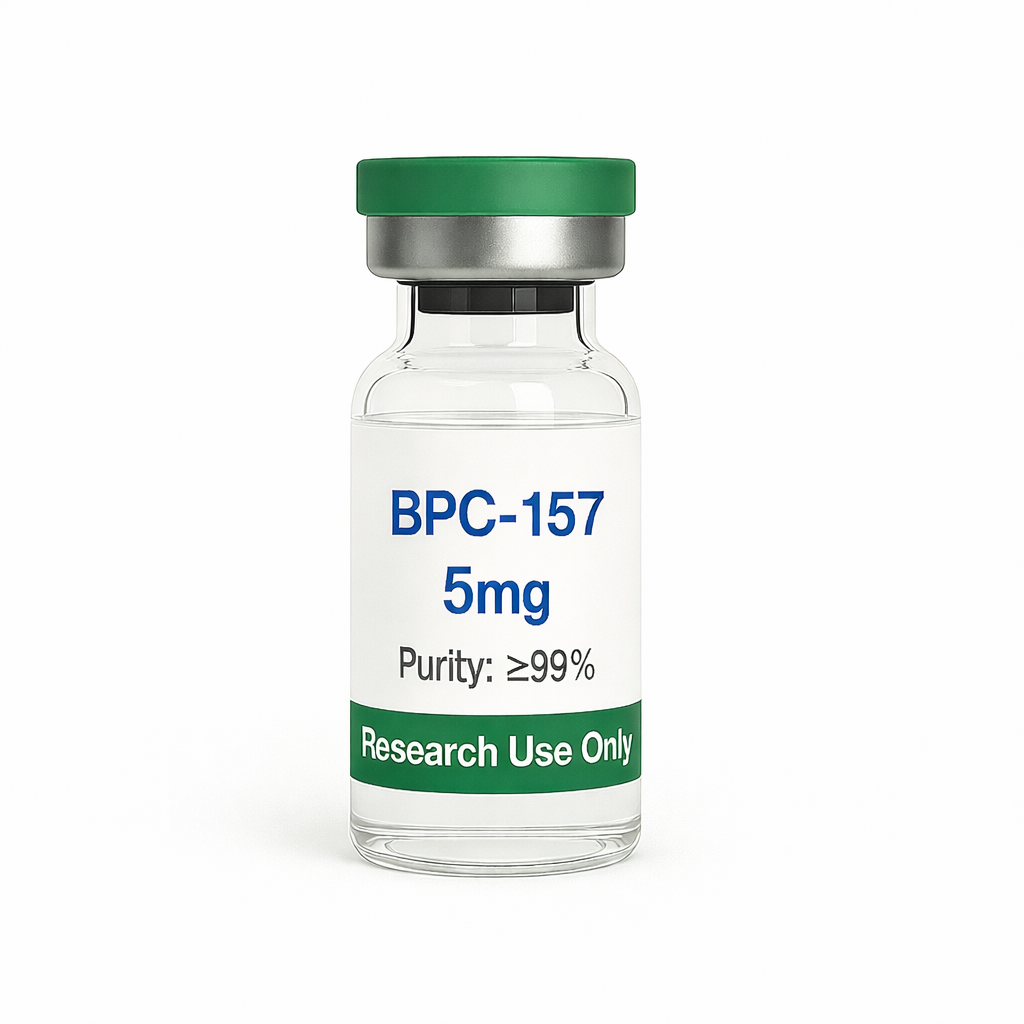
BPC-157, also known as Pentadecapeptide BPC-157 or Body Protection Compound-157, is a synthetically produced bioactive peptide. Multiple studies suggest that it may play a role in the healing and regeneration of joints, tendons, muscle tissue, and neural tissue.
BPC-157 is composed of 15 amino acids and was originally identified as a stable peptide fragment isolated from gastric juice. Due to its amino acid length, it is commonly referred to as a pentadecapeptide.
BPC-157 has attracted significant research interest for its potential role in wound healing and tissue repair. Studies indicate that BPC-157 may interact with or stimulate growth hormone (GH) receptors, thereby inducing GH-like biological effects and promoting cellular proliferation.
This activity may contribute to:
Angiogenesis is a critical component of tissue repair, as it improves oxygen and nutrient delivery to damaged areas, potentially accelerating the reconstruction and healing process.
Serotonin (5-HT) is a key neurotransmitter within the gastrointestinal system and is abundantly present in the gastrointestinal tract and mucosa. Alterations in serotonin levels may influence gastric acid secretion, mucosal barrier integrity, and gastric blood flow.
Research suggests that BPC-157 may exhibit regulatory effects on serotonin-mediated pathways, including:
As a result, BPC-157 has been studied for its potential role in gastrointestinal function modulation.
Current studies have explored BPC-157 in relation to:
Focuses on accelerating cell proliferation and structural rebuilding.
Investigates anti-inflammatory biological activity in tissues.
Explores pathways linked to systemic and localized pain responses.
Studies mucosal integrity, acid secretion, and serotonin pathways.
Evaluates deep tissue musculoskeletal recovery and functional outcomes.
Experimental findings suggest that its mechanisms may involve enhancement of functional recovery, promotion of angiogenesis, and anti-inflammatory activity.
In multiple animal experimental models—including skin injury models, colonic anastomosis models, and synthetic sponge implantation models—researchers observed:
Compared with control groups, BPC-157-treated models demonstrated improved structural tissue reconstruction.
Further studies indicate that BPC-157 may:
Additionally, BPC-157 may influence intracellular signaling pathways, including:
These signaling cascades are essential for cell proliferation, migration, and tissue regeneration.
BPC-157 (Body Protection Compound-157) is a synthetically produced bioactive pentadecapeptide composed of 15 amino acids, originally identified as a fragment isolated from human gastric juice.
Primary research areas include tissue and wound repair, inflammatory response modulation, pain perception mechanisms, gastrointestinal regulation, and the repair of tendons, ligaments, muscle tissue, and bone cells.
Studies show BPC-157 elevates angiogenesis (formation of new blood vessels), increases collagen synthesis, and boosts VEGF expression, thereby enhancing nutrient delivery and accelerating tissue reconstruction.
BPC-157 exhibits regulatory effects on serotonin-mediated pathways in the gut, including potential antagonism of 5-HT2A receptors and limiting serotonin binding, which helps modulate GI functionality.
BPC-157 has a molecular formula of C₆₂H₉₈N₁₆O₂₂ and a molecular weight of 1419.55 g/mol. It is categorized as a 15-amino acid pentadecapeptide.
BPC-157 influences intracellular signaling by regulating ERK1/2 phosphorylation and downstream transcription factors such as c-Fos and c-Jun, which are critical for cell migration and tissue regeneration.