1 / 1

| Item | Details |
|---|---|
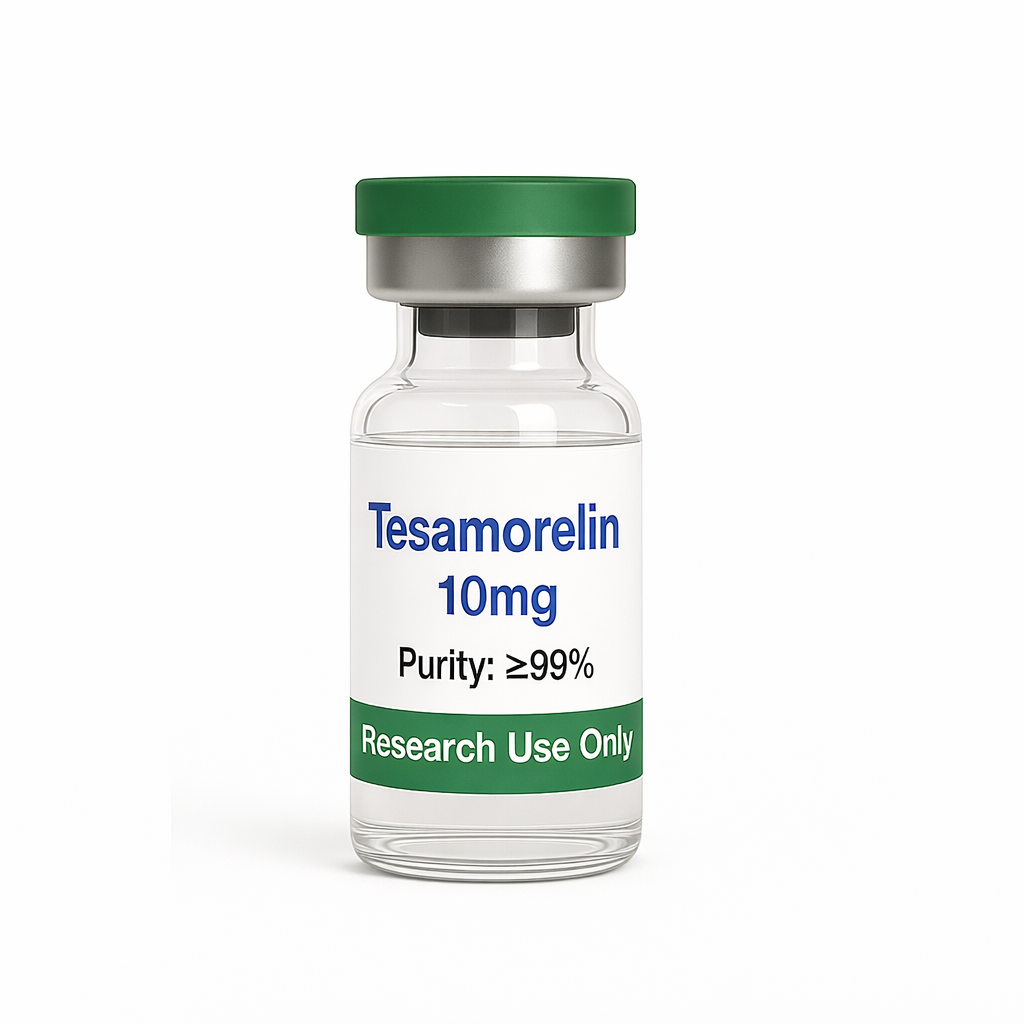
| Name | Tesamorelin |
| Type | GHRH analog (stimulates growth hormone release) |
| Strength | 10 mg lyophilized powder |
| Approved Use | HIV-associated lipodystrophy (FDA-approved) |
| Route | Subcutaneous injection (SC) |
| Item | Method |
|---|---|
| Solvent | 2.0 mL bacteriostatic water |
| Final Concentration | 5.0 mg/mL |
| Storage | Lyophilized powder: refrigerate (2–8 °C) Reconstituted solution: refrigerate, use under sterile conditions |
| Week | Dose | Micrograms (mcg) | U100 Syringe Units | Injection Volume (mL) |
|---|---|---|---|---|
| Week 1 | 1 mg/day | 1000 mcg | 20 units | 0.20 mL |
| Week 2+ | 2 mg/day | 2000 mcg | 40 units | 0.40 mL |
Start at 1 mg/day for the first week, then increase to 2 mg/day.
Injection site reactions, joint pain, edema, blood sugar fluctuations.
IGF‑1 levels, blood glucose, lipids, and overall response.
Use only under medical supervision; maintain sterile technique and proper storage.
Tesamorelin is a GHRH (Growth Hormone-Releasing Hormone) analog approved by the FDA primarily for reducing excess abdominal fat in HIV-associated lipodystrophy.
Both lyophilized powder and reconstituted solutions should be kept refrigerated at 2–8 °C and handled using sterile technique.
Starting with 1 mg/day allows for a tolerance check to evaluate how the body reacts before escalating to the standard 2 mg/day maintenance dose.
It is recommended to inject once daily, ideally in the evening, to align with the body's natural growth hormone secretion rhythm.
Key parameters to monitor under medical supervision include IGF-1 levels, blood glucose, blood lipid profiles, and potential side effects such as joint pain or edema.