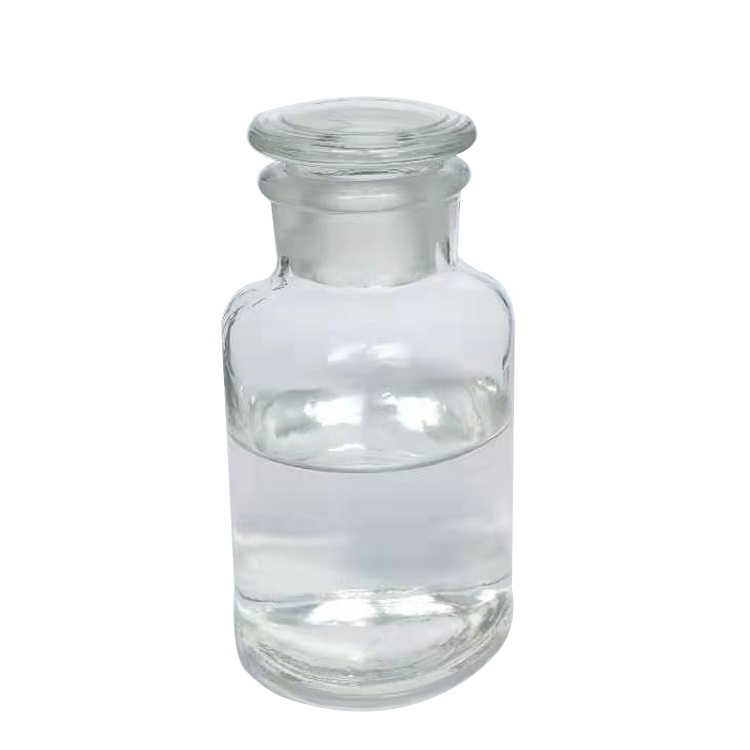
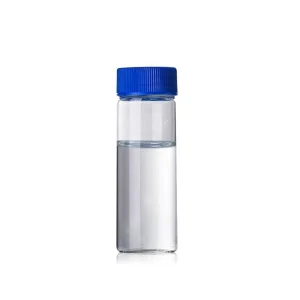
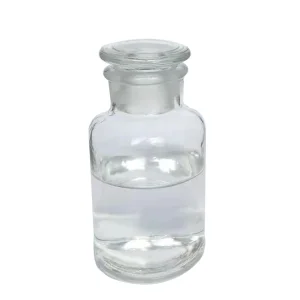
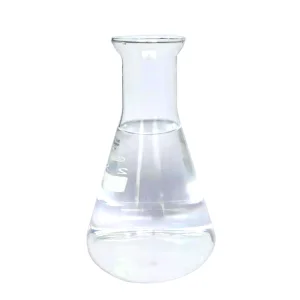
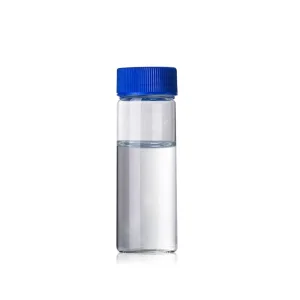
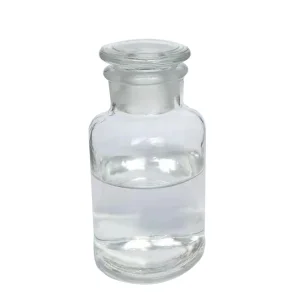
Dibutyl phthalate, also known as dibutyl phthalate or dibutyl phthalate, English: Dibutylphthalate, is a colorless transparent oily liquid with a specific gravity of 1.045 (21°C) and a boiling point of 340°C, insoluble in water, water-soluble and volatile The properties are very low, but it is easily soluble in organic solvents such as ethanol, ether, acetone and benzene, and is also miscible with most hydrocarbons. Dibutyl phthalate (DBP), dioctyl phthalate (DOP) and diisobutyl phthalate (DIBP) are the three most common plasticizers, which are plastics, synthetic rubber and artificial leather, etc. commonly used plasticizers. It is obtained by thermal esterification of phthalic anhydride and n-butanol.
Colorless transparent oily liquid with slightly aromatic odor. Soluble in common organic solvents and hydrocarbons.
Used as a plasticizer for nitrocellulose, cellulose acetate, polyvinyl chloride, etc. This product is a plasticizer. It has strong dissolving power to various resins.
Used for PVC processing, it can impart good softness to products. Because of its relatively cheap and good processability, it is very widely used, almost equivalent to DOP. However, the volatility and water extraction are relatively large, so the durability of the product is poor, and its use should be gradually restricted. This product is an excellent plasticizer of nitrocellulose and has strong gelling ability.
Used for nitrocellulose coatings, has a very good softening effect. Excellent stability, flex resistance, adhesion and water resistance. In addition, the product can be used as a plasticizer for polyvinyl acetate, alkyd resin, ethyl cellulose and neoprene, and can also be used in the manufacture of paints, adhesives, artificial leather, printing inks, safety glass, celluloid, dyes , pesticides, fragrance solvents, fabric lubricants, etc.
As a plasticizer for cellulose ester, salt and natural rubber, polystyrene; to make polyvinyl chloride and its copolymers cold-resistant for organic synthesis, ion selective electrode additives, solvents, insecticides, plasticizers , Gas chromatography stationary liquid (maximum use temperature 100 ℃, solvent is acetone, benzene, dichloromethane, ethanol), selective retention and separation of aromatic compounds, unsaturated compounds, terpene compounds and various oxygen-containing compounds (alcohols, aldehydes, ketones, esters, etc.).
Frequently Asked Questions (FAQ)
What is Dibutyl phthalate (DBP)?
Dibutyl phthalate (DBP) is a colorless transparent oily liquid with a slightly aromatic odor. It is widely used as a plasticizer for plastics, synthetic rubber, coatings, and artificial leather.
What are the key chemical specifications of Dibutyl phthalate?
Dibutyl phthalate has a CAS Number of 84-74-2, a molecular formula of C16H22O4, a molecular weight of 278.34, a boiling point of 340 °C, and a density of 1.043 g/mL at 25 °C.
What is the solubility profile of Dibutyl phthalate?
Dibutyl phthalate is insoluble in water, but it is easily soluble in organic solvents such as ethanol, ether, acetone, and benzene, and miscible with most hydrocarbons.
How should Dibutyl phthalate be stored?
It is recommended to store Dibutyl phthalate under controlled conditions at temperatures between 2°C and 8°C.
How is Dibutyl phthalate produced?
It is obtained through the thermal esterification reaction of phthalic anhydride and n-butanol.
What materials can be plasticized using Dibutyl phthalate?
It acts as an effective plasticizer for nitrocellulose, cellulose acetate, polyvinyl chloride (PVC), polyvinyl acetate, alkyd resin, ethyl cellulose, natural rubber, and neoprene.