1 / 1

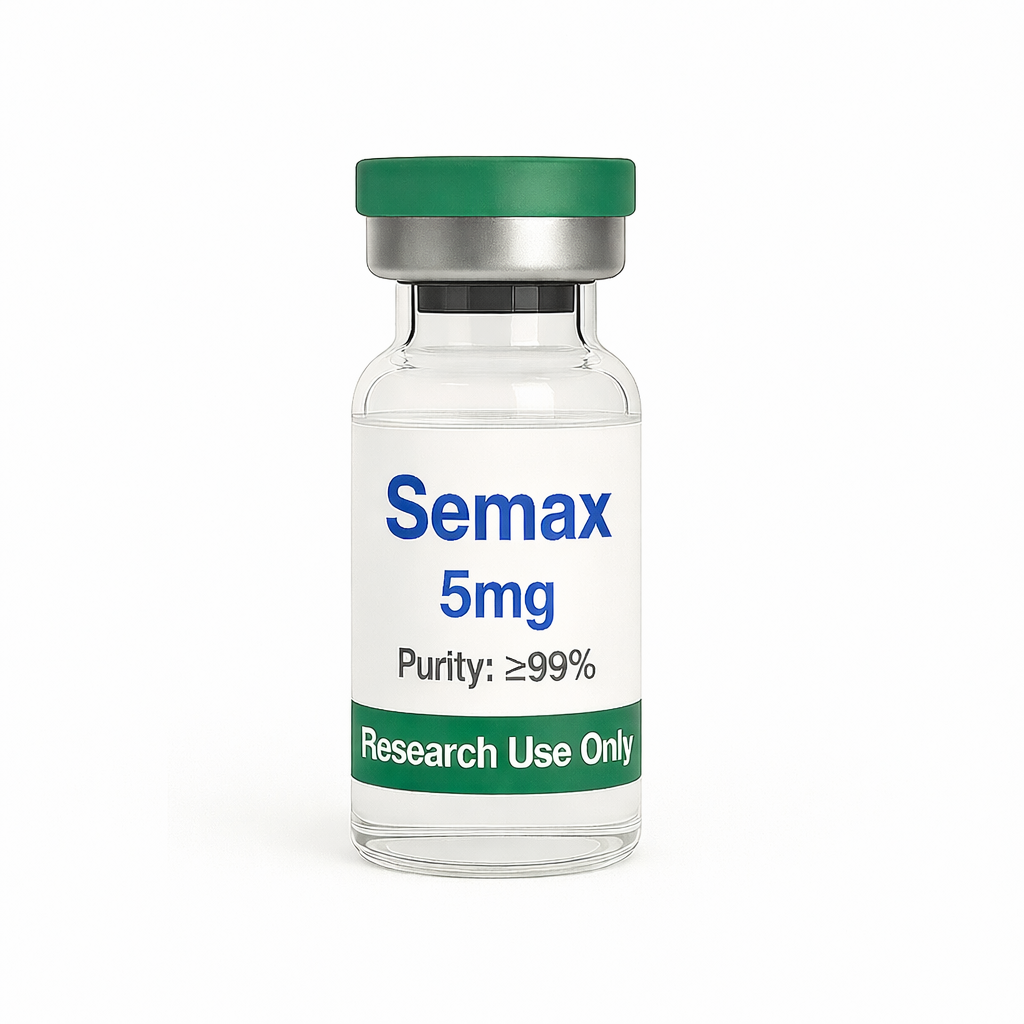
Semax is a heptapeptide originally designed as an analog of the ACTH (4-7) fragment. It primarily acts on the central nervous system through multiple pathways, providing neuroprotective and cognitive-enhancing effects. One of its main actions is the upregulation of brain-derived neurotrophic factor (BDNF). BDNF is essential for neuron survival, synaptic plasticity, and learning and memory processes. By increasing BDNF expression, Semax supports neuronal resilience and adaptability, helping the brain recover more efficiently from stress or injury.
Semax modulates neurotransmitter systems, notably dopamine and serotonin, which contributes to improved attention, learning, and mood regulation. This modulation also underlies its mild anxiolytic effects.
Semax further exhibits antioxidant and anti-apoptotic properties, reducing free radical-induced neuronal damage and enhancing cells’ resistance to stress.
On a hemodynamic and metabolic level, Semax can improve local cerebral blood flow and glucose metabolism, providing active neurons with better energy supply and supporting higher cognitive function and information processing.
Summary: Overall, Semax acts through a synergistic combination of BDNF regulation, neurotransmitter balance, antioxidant protection, and metabolic optimization, resulting in enhanced neural efficiency and stability under conditions of stress, ischemia, or increased cognitive demand.
Semax is a heptapeptide originally designed as an analog of the ACTH (4-7) fragment that acts primarily on the central nervous system.
By upregulating Brain-Derived Neurotrophic Factor (BDNF), Semax supports neuron survival, synaptic plasticity, learning, and memory, helping the brain recover more efficiently from stress or injury.
Semax modulates key neurotransmitter systems, notably dopamine and serotonin, which leads to enhanced attention, improved learning, mood regulation, and mild anxiolytic effects.
Semax demonstrates antioxidant and anti-apoptotic properties that reduce neuronal damage caused by free radicals and boost cellular resistance to stress.
It enhances local cerebral blood flow and glucose metabolism, ensuring active neurons receive an improved energy supply to support higher cognitive functions and information processing.
The synergistic combination of BDNF regulation, neurotransmitter balance, antioxidant defense, and metabolic optimization leads to enhanced neural efficiency and stability under cognitive demand, stress, or ischemia.