1 / 3

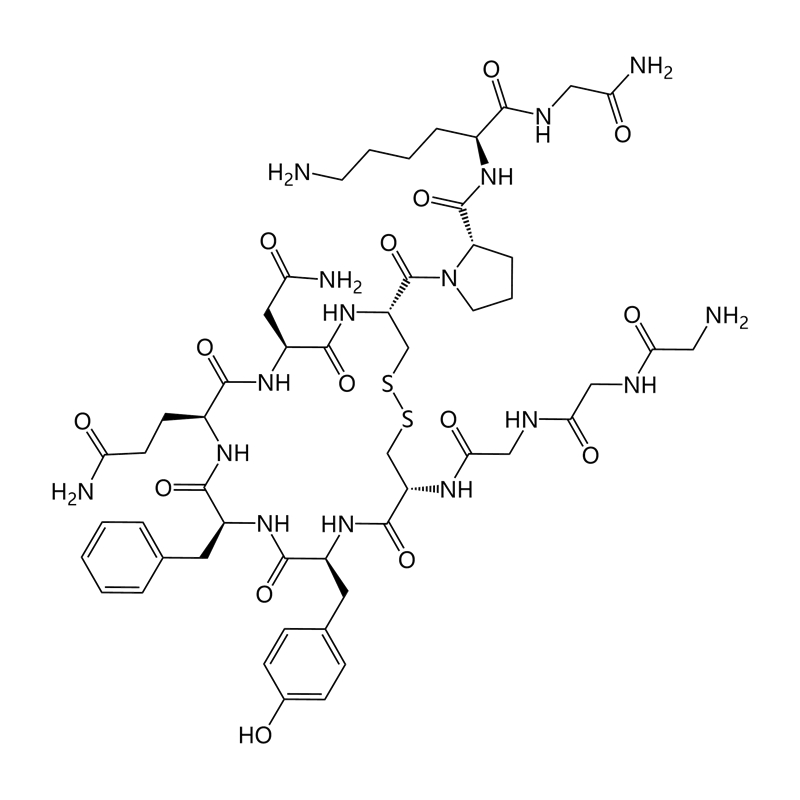
| Name | N-(N-(N-Glycylglycyl)glycyl)-8-L-lysinevasopressin |
| CAS Number | 14636-12-5 |
| Molecular Formula | C52H74N16O15S2 |
| Molecular Weight | 1227.37 |
| EINECS Number | 238-680-8 |
| Boiling Point | 1824.0±65.0 °C (Predicted) |
| Density | 1.46±0.1 g/cm3 (Predicted) |
| Storage Conditions | Keep in dark place, Inert atmosphere, Store in freezer, under -15°C. |
| Acidity Coefficient | (pKa) 9.90±0.15 (Predicted) |
Terlipressin, whose chemical name is triglycyllysine vasopressin, is a synthetic long-acting vasopressin preparation. It is a prodrug that remains inactive on its own. Upon administration, it is acted upon by aminopeptidase in vivo to slowly release active lysine vasopressin by removing three glycyl residues from its N-terminus. Consequently, Terlipressin acts as a reservoir, providing a steady and sustained release of active lysine vasopressin into the system.
The primary pharmacological effect of Terlipressin is the contraction of splanchnic vascular smooth muscle, which reduces splanchnic blood flow (including reduction in the mesentery, spleen, and uterus) and consequently decreases portal blood flow and portal pressure. Additionally, it lowers plasma renin concentration, which leads to increased renal blood flow, improved renal function, and elevated urine output in patients suffering from hepatorenal syndrome.
Terlipressin is currently recognized as a key therapeutic drug capable of improving survival rates in patients with esophageal variceal hemorrhage. Beyond its clinical application in variceal hemorrhage, Terlipressin has demonstrated success in treating hepatic and renal complications, as well as playing a beneficial role in coexisting refractory shock and cardiopulmonary resuscitation.