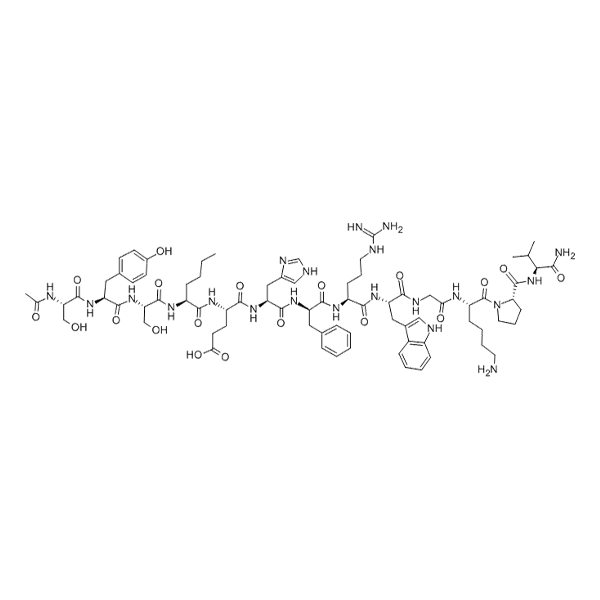
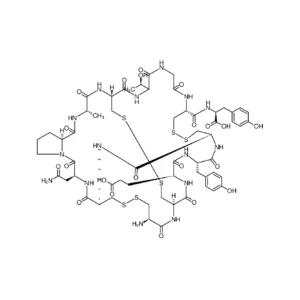
Melanotan 1 is a synthetic peptide analog of α-MSH (alpha-melanocyte stimulating hormone). It works by activating melanocortin-1 receptors (MC1R) to stimulate melanin production, offering natural skin pigmentation and photoprotection.
It has been approved for the treatment of erythropoietic protoporphyria (EPP)—a rare disorder causing extreme sensitivity to sunlight. Melanotan 1 helps increase tolerance to UV light, reduce phototoxic reactions, and enhance skin defense against UV-induced damage.
Mechanism of Action
Selective MC1R agonist
Increases eumelanin production
Provides natural sun protection
Supports DNA repair and anti-inflammatory response
Applications
Potential for vitiligo, skin cancer prevention, and cosmetic pigmentation
Explored in anti-aging and dermatological therapies
API Features
High purity ≥99%
Solid-phase peptide synthesis (SPPS)
GMP-like manufacturing standards
Scalable supply: R&D to commercial levels
Frequently Asked Questions (FAQ)
What is Melanotan 1 API?
Melanotan 1 is a synthetic peptide analog of alpha-melanocyte stimulating hormone (α-MSH). It functions as a selective melanocortin-1 receptor (MC1R) agonist to stimulate melanin production for natural skin pigmentation and photoprotection.
What medical conditions is Melanotan 1 approved for?
Melanotan 1 has been approved for the treatment of erythropoietic protoporphyria (EPP), a rare genetic disorder that causes extreme cutaneous photosensitivity to sunlight.
How does Melanotan 1 provide photoprotection?
By activating MC1R receptors, it increases eumelanin production in the skin. This leads to enhanced UV light tolerance, reduced phototoxic reactions, and improved skin defense against UV-induced damage and DNA repair.
What potential therapeutic applications are being explored for Melanotan 1?
In addition to EPP, Melanotan 1 is being investigated for potential use in vitiligo, skin cancer prevention, cosmetic pigmentation, anti-aging solutions, and broader dermatological therapies.
What are the technical specifications of Melanotan 1 API?
The API features a high purity level of ≥99%, produced using Solid-phase peptide synthesis (SPPS), adheres to GMP-like manufacturing standards, and offers scalable supply options from R&D to commercial production.