Direct-from-factory OEM peptide APIs, customized lyophilization vials, and validated reference compounds manufactured under stringent ISO/cGMP protocols.
An in-depth analysis of mitochondrial-derived peptide manufacturing, batch purity metrics, regulatory compliance protocols, and commercial OEM procurement.
Industry Insights: MOTS-c (Mitochondrial Open Reading Frame of the 12S rRNA Type-C) is a 16-amino acid peptide that regulates metabolic homeostasis, cellular bioenergetics, and insulin sensitivity. Sourcing reliable 5mg OEM lyophilized vials demands validated Solid-Phase Peptide Synthesis (SPPS), precise TFA exchange protocols, and strict endotoxin control under cleanroom environments.
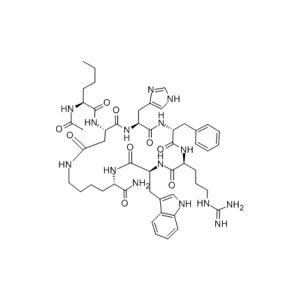
MOTS-c represents a paradigm shift in mitochondrial biology. Encoded within the mitochondrial genome rather than the nuclear DNA, this 16-amino acid signaling molecule (Sequence: Met-Met-Trp-Gln-Glu-Met-Gly-Tyr-Ile-Phe-Tyr-Pro-Arg-Lys-Leu-Arg-NH2) acts as a systemic hormonal regulator. Primary target tissues include skeletal muscle, hepatic cells, and adipose networks where it promotes glucose utilization, fatty acid oxidation, and metabolic flexibility.
From a manufacturing standpoint, synthesizing the MOTS-c peptide sequence presents unique chemical challenges. Containing multiple hydrophobic residues (Met, Trp, Ile, Phe, Leu) alongside cationic arginine and lysine residues, the peptide chain is prone to aggregation, oxidation (specifically at Methionine positions Met1, Met2, and Met6), and secondary structural folding during cleavage. Standard contract manufacturing protocols must incorporate specialized antioxidant scavengers and high-resolution purification steps to achieve the commercial benchmark of ≥98% to ≥99% purity by Analytical HPLC.
| Parameter | Technical Specification / Standard | Analytical Method |
|---|---|---|
| CAS Registry Number | 1627580-64-6 | CAS Standard Identification |
| Molecular Formula | C101H152N28O22S2 | Empirical Calculation |
| Molecular Weight | 2174.61 g/mol | Electrospray Ionization (ESI-MS) / MALDI-TOF |
| Purity Level (OEM Standard) | ≥98.0% up to ≥99.5% | Reverse-Phase High-Performance Liquid Chromatography (RP-HPLC) |
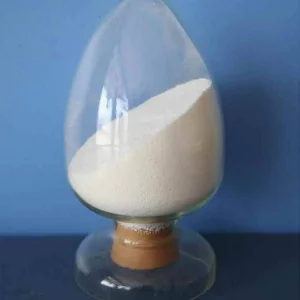
| Physical Form | Sterile White to Off-White Lyophilized Powder | Visual Inspection & Reconstitution Clarity Assay |
| Endotoxin Level | < 0.05 EU/mg (Research/Formulation Grade) | Limulus Amebocyte Lysate (LAL) Kinetic Assay |
| Trifluoroacetic Acid (TFA) Content | < 1.0% (Acetate or Hydrochloride Salt Conversion Available) | Ion Exchange Chromatography (IC) |
Achieving commercial yield for MOTS-c 5mg vials while maintaining strict batch-to-batch consistency requires automated Fmoc solid-phase peptide synthesis (Fmoc-SPPS). The assembly process starts on a high-load resin (such as Rink Amide AM or Sieber Amide resin) to ensure C-terminal amidation, which is critical for natural biological activity and peptide stability.
Due to the presence of bulky aromatic residues (Trp3, Tyr8, Phe10, Tyr11), steric hindrance frequently occurs during chain elongation. Leading OEM factories utilize advanced coupling reagents such as HATU/HOAt or PyBOP/DIEA paired with microwave-assisted synthesis systems. This minimizes incomplete coupling cycles and prevents deletion sequences (e.g., des-Met or des-Leu analogs), which are otherwise exceptionally difficult to remove during downstream RP-HPLC purification.
With three methionine residues present within the 16-mer chain, oxidative degradation forming Methionine Sulfoxide [Met(O)] is the primary pathway for product breakdown during synthesis and cleavage. Professional OEM suppliers enforce nitrogen bubbling, use scavenger cocktails containing Ethanedithiol (EDT), Triisopropylsilane (TIS), and Dimethyl sulfide (DMS) during TFA cleavage, and execute freeze-drying under controlled vacuum environments to eliminate residual oxygen exposure.
Global supply network, international cGMP manufacturing standards, and customized peptide API solutions.
Gentolex’s goal is to create opportunities connecting the world with better services and guaranteed products. Up to date, Gentolex Group has been serving customers from more than 10 countries, specially, representatives are established in Mexico and South Africa. Our main services focus on supplying peptides APIs and Custom Peptides, FDF license out, Technical Support & Consultation, Product Line and Lab Setup, Sourcing & Supply Chain Solutions.
Our main services focus on supplying peptides APIs and Custom Peptides, FDF license out, Technical Support & Consultation, Product Line and Lab Setup, Sourcing & Supply Chain Solutions.
An overall factory construction area of 250,000 square meters under international standard to offer flexible, scalable and cost-effective solutions.
Gentolex offers an extensive range of APIs and intermediates for development study and commercial application with cGMP standard from long-term collaborations. Documents and Certificates are supported to customers worldwide.
Custom synthesis, scale-up process optimization, process validation, analytical method development (HPLC, LC-MS), and regulatory file compilation (DMF support).
For those clients who prefer to avoid the complexity of dealing with multiple points of contact, we provide extra customized procurement services with the most superior and comprehensive supply chain sources.
China has emerged as the global epicenter for industrial peptide synthesis and custom contract manufacturing (CDMO). The integration of raw material production (Fmoc-amino acids, resin, coupling reagents), advanced purification machinery, and specialized lyophilization infrastructure provides unparalleled structural advantages for global biopharmaceutical buyers and research institutions.
Domestic vertical integration of protecting groups (Fmoc/Boc) and specialized side-chain protective amino acids significantly reduces direct synthesis costs by 35%–50% compared to Western chemical foundries.
Equipped with industrial freeze-dryers spanning hundreds of square meters, Chinese factories easily execute 50,000 to 200,000 vial runs per batch, guaranteeing uniformity across 5mg unit specifications.
Full transparency with every batch: Certificate of Analysis (COA), High-Performance Liquid Chromatography (HPLC) traces, Mass Spectrometry (MS) spectra, and residual solvent analysis via GC-MS.
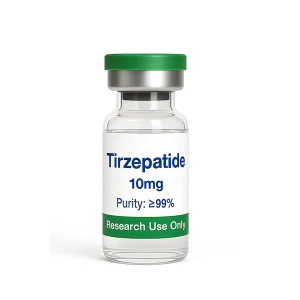
International corporate purchasers, biotechnology firms, and laboratory distributors require tailored OEM/ODM manufacturing workflows. Acquiring bulk MOTS-c 5mg goes beyond basic chemical ordering—it encompasses turn-key product customization:
Cross-border chemical procurement faces complex regulatory barriers, customs clearance challenges, and cold-chain transport requirements. Gentolex Group bridges these friction points by establishing regional hubs and localized compliance protocols.
Regional Operational Hubs: To serve local markets directly, Gentolex maintains established localized representatives and logistics nodes in key emerging markets including Mexico and South Africa. This infrastructure allows local currency clearing, tax-compliant invoicing, and rapid regional dispatch.
Peptides are sensitive to thermal degradation. Lyophilized MOTS-c 5mg vials are packaged using insulated cold-chain shipping containers integrated with real-time temperature data loggers. For short-term transit, ambient temperature is maintained under 25°C; long-term warehouse storage is enforced at -20°C in climate-controlled cleanroom facilities.
The global demand for mitochondrial-derived peptides (MDPs) like MOTS-c is expanding rapidly driven by key scientific and commercial vectors:
As metabolic syndrome and insulin resistance rise globally, MOTS-c serves as a core research tool due to its ability to activate AMPK (AMP-activated protein kinase) independent of cellular energy charge, promoting glucose uptake in skeletal muscle.
Mitochondrial dysfunction is a hallmark of biological aging. MOTS-c translocation to the nucleus under stress conditions regulates nuclear gene expression, making it a pivotal subject in anti-aging cosmetic and bio-nutraceutical R&D.


Latest insights on peptide synthesis, API compliance, and neuroactive compound development.

Introduction to Selank Acetate API Selank Acetate API is a synthetic heptapeptide active pharmaceutical ingredient (API) composed of the amino acid sequence Thr-Lys-Pro-Arg-Pro-Gly-Pro (TKPRPGP). Originally developed through neuropharmacological research, Selank is a derivative of the endogenous...
View Details
Trusted Thymosin Beta-4 API Manufacturer and Global Peptide Supplier As a professional Thymosin Beta-4 API manufacturer and supplier, we provide high-quality Thymosin Beta-4 peptide API solutions for biotechnology companies, pharmaceutical research organizations, and li...
View Details
Introduction BPC-157 API is a synthetic pentadecapeptide that has gained increasing attention in peptide research due to its potential biological activities related to tissue repair, gastrointestinal protection, angiogenesis, and inflammatory regulation. As a peptide ac...
View Details
With the continuous development of neuroscience, peptide technology, and life science research, neuroactive peptides have become an important area of scientific investigation. Semax, a synthetic peptide derived from an ACTH fragment, has attracted attention among researchers due to its unique mol...
View Details
SS-31 (Elamipretide) API SS-31 API, also known as Elamipretide, MTP-131, Bendavia, and SS31, is a synthetic mitochondria-targeting tetrapeptide designed to bind cardiolipin in the inner mitochondrial membrane. By stabilizing mitochondrial structure and supporting cellular bioenergetics, SS-31 ha...
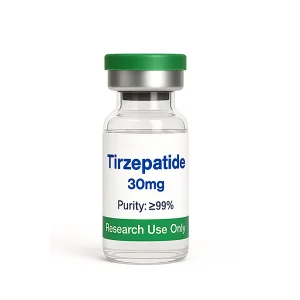
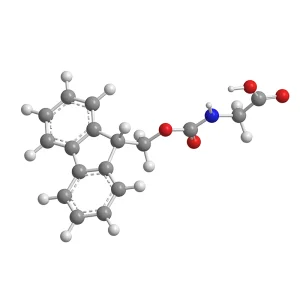
View DetailsExplore our complete collection of custom amino acid derivatives, weight management peptides, and industrial research APIs.
Essential information for corporate purchasing officers, CDMO buyers, and laboratory research project managers.
For standard off-the-shelf research grade batches, MOQs start as low as 100 vials (5mg/vial). For custom white-label packaging, branded flip-off caps, and custom lyoprotectant matrix formulation, standard production run MOQs typically range between 1,000 and 5,000 vials per batch.
Every production lot undergoes rigorous analytical testing: Reverse-Phase HPLC (RP-HPLC) determines chemical purity (standard ≥98.0%), Mass Spectrometry (ESI-MS) confirms exact molecular weight (2174.61 g/mol), and LAL testing verifies endotoxin levels are under strictly defined parameters (<0.05 EU/mg).
Yes. While standard raw peptide synthesis results in a Trifluoroacetate (TFA) salt form, our post-purification processing includes counter-ion exchange columns to yield Acetate salts (TFA < 1%) or Hydrochloride salts depending on your biological model requirements.
We offer comprehensive ODM/OEM capabilities: customized vial sizes (2ml, 3ml, 5ml), custom cap color combinations, laser-etched aluminum seals, custom box packaging, and multi-vial kit assembly with customized user documentation.
With established local representative entities in Mexico and South Africa, Gentolex handles complex tariff classifications, localized compliance documentation, and import regulatory permits, ensuring seamless customs passage and door-to-door delivery.
Lyophilized MOTS-c vials remain stable at room temperature (under 25°C) for several weeks during shipping. However, for long-term warehousing (>6 months), vials should be stored at -20°C or -80°C in a desiccated environment protected from direct light exposure.