Explore our cGMP-compliant research compounds, active pharmaceutical ingredients (APIs), and specialized peptide intermediates.
AZD-9291, chemically identified as N-(2-((2-(dimethylamino)ethyl)(methyl)amino)-4-methoxy-5-((4-(1-methyl-1H-indol-3-yl)pyrimidin-2-yl)amino)phenyl)acrylamide and commercially recognized as Osimertinib (CAS No. 1421373-65-0), represents a pivotal third-generation, irreversible epidermal growth factor receptor (EGFR) tyrosine kinase inhibitor (TKI). Specially engineered to target the EGFR-activating mutations (EGFRm) as well as the T790M resistance mutation, AZD-9291 has revolutionized targeted oncology therapy for non-small cell lung cancer (NSCLC).
The commercial trajectory for AZD-9291 active pharmaceutical ingredient (API) and its key synthetic precursors has witnessed exponential growth. As first- and second-generation EGFR inhibitors (such as Erlotinib, Gefitinib, and Afatinib) inevitably encounter acquired resistance mediated primarily through the secondary exon 20 T790M mutation, AZD-9291 has become the frontline gold standard. Furthermore, expanding clinical evaluations into adjuvant therapies and combination regimens with MET inhibitors or chemotherapy have escalated global demand for research-grade, pilot-scale, and commercial-scale bulk supplies.
Exhibits potent inhibitory activity against EGFR-sensitizing and T790M resistance mutations while demonstrating significantly lower affinity for wild-type (WT) EGFR, substantially mitigating dose-limiting cutaneous and gastrointestinal toxicities.
Designed to effectively cross the blood-brain barrier (BBB), establishing superior efficacy against central nervous system (CNS) metastases—a frequent progression site in advanced NSCLC patients.
Pharmaceutical formulators and contract research organizations (CROs) require seamless international procurement channels capable of supplying stable, highly reproducible batches accompanied by full analytical dossier validation.
Navigating the complex synthetic chemistry of AZD-9291 requires meticulous control over reaction parameters, regioselectivity, and organic impurity profiles. As premier suppliers and global exporters, our chemical engineering workflows adhere to stringent cGMP protocols and ICH Q3A/B guidelines.
| Parameter / Test | Specification Benchmark | Analytical Methodology |
|---|---|---|
| Chemical Name | N-(2-((2-(dimethylamino)ethyl)(methyl)amino)-4-methoxy-5-((4-(1-methyl-1H-indol-3-yl)pyrimidin-2-yl)amino)phenyl)acrylamide | IUPAC Nomenclature Standard |
| CAS Registry Number | 1421373-65-0 (Free Base) / 1421373-66-1 (Mesylate Salt) | CAS Chemical Index |
| Molecular Formula / Weight | C28H33N7O2 / 499.61 g/mol | High-Resolution Mass Spectrometry (HRMS) |
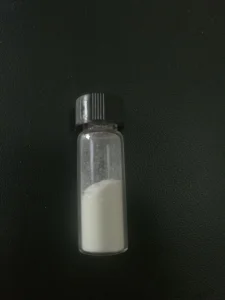
| Physical Appearance | Off-white to pale yellow crystalline solid / powder | Visual Inspection |
| Purity (HPLC Assay) | ≥ 99.50% (Individual Impurity < 0.10%) | Reverse-Phase HPLC-UV (254nm / 310nm) |
| Genotoxic Impurities | Conforms to ICH M7 limits (< 1.5 µg/day intake limit) | LC-MS/MS Trace Impurity Profiling |
| Residual Solvents | Methanol < 3000 ppm, DMF < 880 ppm, DCM < 600 ppm | Headspace Gas Chromatography (HS-GC-FID) |
| Heavy Metal Limits | Lead, Arsenic, Cadmium, Mercury < 10 ppm total | ICP-MS Validation |
The commercial synthesis of AZD-9291 typically proceeds through a multi-step organic reaction sequence involving 4-chloro-2-(1-methyl-1H-indol-3-yl)pyrimidine as a critical intermediate. Key technical hurdles solved in our advanced manufacturing facilities include:
China has solidified its leadership position in the global chemical and pharmaceutical synthesis ecosystem. By harnessing fully integrated industrial clusters, advanced continuous-flow chemistry, and deep raw material integration, Chinese manufacturing hubs deliver unmatched cost-efficiency, technical rigor, and production scalability for compounds like AZD-9291.
Massive modern facility footprints operationalized under international cGMP standards allow concurrent multi-ton synthesis of key intermediates and high-potency APIs (HPAPIs).
Direct access to fundamental chemical building blocks—such as indole derivatives, pyrimidine precursors, and specialized diamines—insulates the supply chain from global market shocks.
Automated chemical reactors and real-time Process Analytical Technology (PAT) reduce batch cycle times by 40%, ensuring rapid fulfillment for global clinical and industrial supply pipelines.
Our core capabilities encompass supplying specialized peptide APIs, Custom Peptides, FDF (Finished Dosage Form) license out solutions, Technical Support & Consultation, complete Product Line and Lab Setup, as well as comprehensive Sourcing & Supply Chain Solutions.
An overall factory construction area of 250,000 square meters under international standards provides flexible, scalable, and cost-effective solutions for clients globally.
AZD-9291 chemical products cater to diverse segments across the global pharmaceutical ecosystem. Understanding specific application requirements enables customized supply chain solutions tailored to regional regulatory environments and technical objectives.
Research institutions and CROs require analytical-grade AZD-9291 (purity ≥ 99.5%) with documented CoA, NMR, LC-MS, and HPLC traces. Small-batch procurement (10g to 1kg) demands rapid air-freight logistics under strict temperature-controlled conditions.
Generic pharmaceutical manufacturers in patent-expired or non-infringing jurisdictions mandate multi-hundred kilogram batches of Osimertinib Mesylate. Vendors must provide DMF (Drug Master File) documentation, CEP/COS support, and cGMP compliance data.
Biotech entities innovating novel TKI modifications rely on custom synthesis suppliers to manufacture structural analogues or isotopically labeled AZD-9291 derivatives for pharmacokinetic (PK/PD) profiling.
Enterprise buyers avoiding complex multi-vendor logistics leverage complete supply chain integration: from precursor raw materials to final dosage technology transfers and localized regulatory filings.
The targeted oncology domain is continuously evolving. While AZD-9291 remains a cornerstone therapy, scientific research is actively addressing emerging clinical challenges such as the tertiary C797S resistance mutation.
Development of reversible and irreversible inhibitors designed specifically to overcome triple-mutant EGFR (Activating + T790M + C797S), expanding the utility of intermediate building blocks related to the AZD-9291 scaffold.
Proteolysis Targeting Chimeras (PROTACs) utilizing AZD-9291 pharmacophores to induce selective ubiquitin-proteasomal degradation of mutant EGFR proteins rather than simple enzymatic inhibition.
Transitioning to enzymatic transformations, catalytic cross-couplings, and solvent-free micro-reactor technologies to drastically reduce E-factor ratings and hazardous waste output in industrial synthesis.
Gentolex’s goal is to create opportunities connecting the world with better services and guaranteed products. Up to date, Gentolex Group has been serving customers from more than 10 countries, specially, representatives are established in Mexico and South Africa. Our main services focus on supplying peptides APIs and Custom Peptides, FDF license out, Technical Support & Consultation, Product Line and Lab Setup, Sourcing & Supply Chain Solutions.
An overall factory construction area of 250,000 square meters under international standard to offer flexible, scalable and cost-effective solutions.
Gentolex offers an extensive range of APIs and intermediates for development study and commercial application with cGMP standard from long-term collaborations. Documents and Certificates are supported to customers worldwide.
Continuous process optimization, chemical route validation, and state-of-the-art analytical testing services.
For those clients who prefer to avoid the complexity of dealing with multiple points of contact, we provide extra customized procurement services with the most superior and comprehensive supply chain sources.


Stay informed with our latest scientific updates, peptide synthesis whitepapers, and API industrial releases.

Introduction to Selank Acetate API: Selank Acetate API is a synthetic heptapeptide active pharmaceutical ingredient composed of the amino acid sequence Thr-Lys-Pro-Arg-Pro-Gly-Pro (TKPRPGP)...
View Details
Trusted Thymosin Beta-4 API Manufacturer and Global Peptide Supplier. As a professional Thymosin Beta-4 API manufacturer, we provide high-quality peptide solutions for biotechnology companies...
View Details
BPC-157 API is a synthetic pentadecapeptide that has gained increasing attention in peptide research due to its potential biological activities related to tissue repair, gastrointestinal protection, and angiogenesis...
View Details
With continuous development in neuroscience and peptide technology, neuroactive peptides have become crucial. Semax, derived from an ACTH fragment, attracts high scientific interest...
View Details
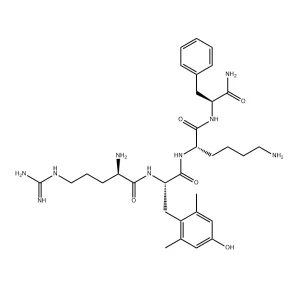
SS-31 API, also known as Elamipretide, MTP-131, Bendavia, is a synthetic mitochondria-targeting tetrapeptide designed to bind cardiolipin in the inner mitochondrial membrane to support cellular bioenergetics...
View DetailsKey insights for procurement managers, analytical chemists, and global pharmaceutical exporters sourcing AZD-9291.
Additional specialized pharmaceutical ingredients, small molecule APIs, and customized peptide formulations.